When I design a first-purchase offer, I never start with the reward itself. I start with the decision I want a new shopper to make. Do I want a first order today? A larger first order? A second order within a short window? Or a sign-up that turns into a long-term customer relationship? That one question usually changes everything, because free shipping, store credit, and points each push buyers in a different direction.
I have seen brands use all three with success, but I have also seen them waste money by choosing a reward that feels generous while doing little for margin, repeat rate, or lifetime value. First-time buyers are not all the same. Some are price sensitive, some are cautious, some are already close to purchase, and some just need a small push to overcome friction. The right offer depends on which barrier you are trying to remove.
What each reward really does
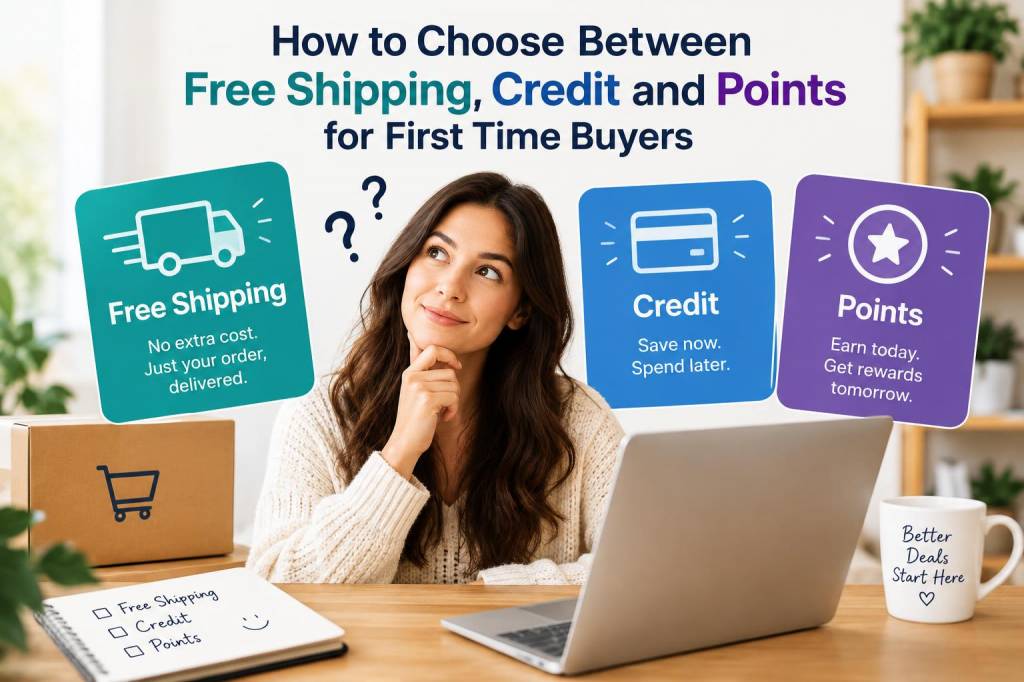
I like to think of free shipping, credit, and points as three different psychological tools. They are not interchangeable, even if they can all reduce hesitation.
Free shipping removes a visible cost at checkout. For many first-time buyers, shipping feels like a penalty. They may like the product, but they resist paying extra for delivery on top of a first order they are still evaluating. Free shipping is simple, easy to understand, and very effective when shipping costs create drop-off.
Store credit works differently. It gives buyers a reason to return. Rather than removing friction from the first transaction only, it creates a second visit. In my experience, credit can be powerful when the average order margin is healthy enough to fund a future incentive, and when the brand wants to build habit rather than just close a sale.
Points are the most flexible option, but also the most abstract. They work best when shoppers already understand your loyalty program or when you are building toward a longer relationship. Points can feel exciting to loyalty-minded customers, but for a first-time buyer they often need more explanation than a direct reward. If the value is not obvious, the reward loses impact.
When free shipping makes sense
I usually reach for free shipping first when checkout friction is the main problem. If I see a high cart abandonment rate at the shipping step, or if customer feedback shows that delivery fees are a turnoff, free shipping is often the cleanest solution. It is easy to communicate and easy to redeem, which matters a lot for a new customer who has not yet built trust.
Free shipping also works well when the product price is relatively low and the shipping fee feels disproportionately high. In those cases, even a modest delivery charge can make the purchase feel less attractive than it really is. I have seen small e-commerce brands unlock strong conversion gains simply by removing that annoyance for first orders.
That said, I am cautious when shipping costs are already embedded into product pricing or when fulfilment margins are tight. If the reward eats into profitability without improving repeat behaviour, you may be buying a conversion that does not pay back. In that case, I would rather test a threshold such as free shipping above a minimum basket value, so the reward also encourages a larger first order.
Free shipping is also strongest when the offer is time bound and clear. A message such as free shipping on your first order this week usually creates more urgency than a vague permanent promise. First-time buyers need a reason to act now, not someday.
When store credit is a smarter move
Store credit is my preferred option when I want to shape future behaviour, not just remove current friction. It can be especially effective for businesses with healthy repeat purchase potential, such as beauty, wellness, apparel, specialty food, and consumables. In those categories, a first-time buyer can easily become a second-time buyer if the initial experience is good and there is a reason to come back.
What I like about credit is that it creates a sense of future value while still feeling tangible. A buyer sees something concrete: spend now, receive value later. That can be more persuasive than points, which often feel delayed or complicated. Credit also helps protect margin because it usually returns only if the customer buys again.
I often recommend credit when a brand wants to encourage a second order within a specific period. For example, a small credit valid for thirty days can create a strong return window. That makes the first purchase feel like the beginning of a relationship rather than a one-off transaction. I have found this especially useful when a business has strong product satisfaction but weak repeat momentum.
The risk with credit is that it can attract bargain hunters who only want the incentive. To reduce that risk, I make sure the reward is tied to a realistic follow-up behaviour. I also keep the terms simple. If customers need a paragraph of explanation to understand how to redeem it, the reward is too complicated.
When points are worth using
Points are not my first choice for a first-time buyer unless the brand already has a familiar loyalty structure or the points have a very clear cash value. Points are strongest when they fit into a larger program and when customers can quickly understand what they are worth. If the reward feels distant or hard to calculate, it loses power.
That does not mean points are weak. They can be excellent for brands that want to train customers into a loyalty habit early. They can also support broader engagement beyond the first purchase, such as referrals, reviews, social actions, or repeat visits. I like points when they are part of a larger ecosystem rather than a standalone welcome incentive.
For first-time buyers, I would only use points if I can make the value extremely visible. A message like earn 500 points worth £5 on your first order is much stronger than a vague promise that points will accumulate over time. The buyer should immediately understand what they gain and why it matters.
I also use points when the brand wants data and segmentation benefits. If a loyalty structure is already in place, first-time buyers who join through points can be identified, tracked, and nurtured more easily. In that case, the reward is not only about conversion; it is also about building a measurable customer base.
What I compare before I choose
Whenever I help a business decide among these options, I compare five things: margin, repeat potential, customer clarity, fulfilment complexity, and strategic goal. That framework keeps the decision grounded in business reality rather than excitement.
| Reward | Strongest use case | Main advantage | Main risk |
|---|---|---|---|
| Free shipping | Checkout friction and shipping sensitivity | Simple and immediate | Can reduce margin without improving loyalty |
| Store credit | Repeat purchase creation | Encourages return visits | May attract only deal-seekers if poorly timed |
| Points | Existing loyalty structure and long-term engagement | Flexible and scalable | Can feel abstract or confusing |
If a brand has thin margins and low shipping costs, I may avoid free shipping and use credit instead. If a brand has strong repeat purchase economics but low program awareness, I may simplify everything and lead with free shipping plus a future credit. If the business already has a loyalty platform and a clear points currency, I may use points only if the value is easy to see on the product page and at checkout.
What I usually test first
I rarely trust instinct alone. I prefer to test two or three reward structures against one another, because customer response often surprises people. A business may assume free shipping is the winner, only to discover that credit produces higher order values and better second-order retention. Another brand may assume points are too soft, then find that a clearly framed points bonus drives strong signup and decent repeat rate.
My favourite tests usually compare:
- Free shipping versus a fixed-value credit
- Points versus credit with the same estimated value
- Free shipping on any order versus free shipping above a basket threshold
- Immediate reward versus delayed reward after first purchase
What matters is not only conversion rate. I also watch average order value, margin after incentive cost, second purchase rate, and time to next order. A reward can win the first transaction and still lose overall if it brings in customers who never return.
What I tell SMEs when budget is tight
For smaller businesses, I usually advise against overcomplicated reward structures. First-time buyers need clarity more than novelty. If your team cannot explain the offer in one sentence, it is too hard. If your finance team cannot estimate the cost quickly, it is too risky. If your customers cannot see the value instantly, it will underperform.
In many SME cases, my starting point is simple: use free shipping if shipping friction is blocking conversion, use credit if repeat purchase matters most, and use points only if you already have a loyalty system that customers understand. I also keep an eye on product category, because fashion, beauty, food, and home goods behave differently. A first-time buyer in one category may respond to points, while another category may respond almost entirely to delivery relief.
One thing I always check is whether the offer matches the brand promise. A premium brand can undermine itself with a clumsy reward that feels cheap or confusing. A value-led brand may need a sharper incentive to overcome price hesitation. The reward should reinforce the experience, not distract from it.
I have learned that the strongest first-time buyer offer is rarely the one with the highest headline value. It is the one that feels easy, relevant, and believable at exactly the moment the shopper is deciding whether to trust you. When I choose between free shipping, credit, and points, I am really choosing which barrier to remove and which future behaviour to encourage.