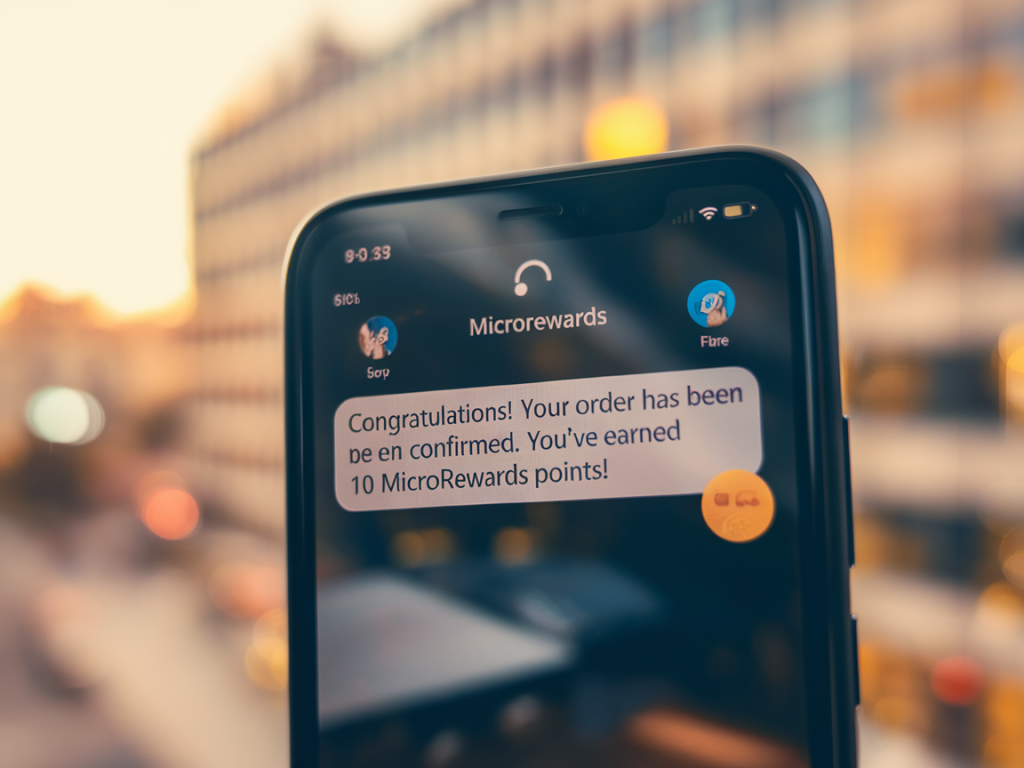
I often see the same pattern when I audit loyalty and retention programmes for small and mid-sized brands: customers convert on their first purchase, then disappear. The second-purchase drop-off is one of the most common—and most solvable—leaks in the retention funnel. Recently, I’ve been testing a tactic that consistently helps plug that leak: SMS-triggered microrewards. Small, timely incentives sent by SMS based on customer behaviour can nudge shoppers back to the brand at the moment it matters most.
Why focus on the second purchase?
Getting a customer to buy once is expensive. The second purchase is where the economics begin to look attractive: acquisition cost has already been paid, and a repeat purchase signals emerging loyalty. If you can increase second-purchase rates by even 5–10 percentage points, you materially improve cohort lifetime value and make future marketing far more efficient.
But the window to influence that behaviour is narrow. After the first purchase, customers either come back within a product-specific repurchase cycle or they don’t. That’s where SMS-triggered microrewards shine: they reach customers directly, with high open rates and immediate visibility, and they can be precisely timed to match buying intent.
What exactly are SMS-triggered microrewards?
- SMS-triggered: messages are sent automatically when a customer hits a pre-defined behaviour or time threshold (e.g., 10 days after purchase, or when a browse event indicates consideration).
- Microrewards: small incentives—think £1–£5 discounts, free shipping, samples, or bonus points—that are attractive enough to nudge behaviour but cheap enough to scale.
- Behavioural pairing: the reward is timed to align with product lifecycles, delivery experience or the expected repurchase moment.
Why SMS, not email?
Email is valuable for long-form content, but SMS delivers immediacy. Typical SMS open rates exceed 90% and most recipients read within minutes. For a second-purchase nudge that depends on reaching the customer when they’re thinking about you (or when they need to reorder), nothing beats a short, personal SMS.
Timing and triggers that work
- Reorder windows: For consumables (skincare, supplements, coffee), estimate the typical usage period and trigger an SMS a few days before a customer likely runs out.
- Post-delivery engagement: 3–7 days after delivery—ask how they’re getting on, offer a small reward for a review or for reordering.
- Abandoned browse/cart after first buy: If a first-time buyer returns and browses without purchasing, trigger a microreward to close the gap.
- Points accelerators: If you use a points system, trigger an SMS when a customer is within a small threshold of a redemption reward (e.g., “Top up by 50 points for a free sample”).
Microreward examples that convert
- £2–£5 off next order with a minimum basket—works for higher AOV brands.
- Free shipping for a limited time—effective if shipping cost is a known barrier.
- Bonus loyalty points that nudge customers toward a first meaningful redemption.
- Free sample or trial-size product sent with the next order—great for beauty and FMCG.
- Time-limited product bundles at a small discount—encourages larger AOV and faster repurchase.
Message templates that convert (short & human)
I find short, personal copy works best. Here are three templates you can adapt:
- “Hi Jane — thanks for your order! Fancy £3 off your next box? Use code TRYAGAIN3 in the next 7 days. — Brand Team”
- “Hope you’re enjoying your new coffee. Running low? Free shipping on your next bag — use FREESHIP until Sunday.”
- “We’d love your thoughts. Leave a quick review and earn 100 bonus points—redeemable for a free sample.”
Segmentation and personalisation
Not all first-time buyers are equal. Segment by:
- Product category (consumable vs durable)
- Order value (high-AOV vs low-AOV)
- Acquisition channel (organic, paid social, referral)
- Time-to-first-open metrics (engaged vs passive users)
Then personalise the SMS: reference the product, suggest complementary items, or adjust the reward size by expected margin. A £2 incentive may be enough for a £15 re-order but wasted on a £100 luxury purchase.
Measurement: what to track
Keep the focus on simple, actionable metrics:
- Second-purchase rate for cohorts that received SMS vs control cohort (use AB testing).
- Time-to-second-purchase—median days between first and second order.
- Incremental revenue attributed to the SMS campaign across the first 90 days.
- Cost per incremental order—include reward cost, SMS delivery, and any operational expense.
- Redemption patterns—are people redeeming online or via customer service?
Testing framework
Always A/B test. My usual structure:
- Control: no SMS after purchase.
- Variant A: generic SMS with microreward at X days.
- Variant B: personalised SMS referencing the product at X days.
- Variant C: higher-value reward with longer expiry.
Run tests on sufficiently large cohorts (minimum 1,000 customers where possible for statistical confidence) and measure 30–90 day outcomes depending on product purchase cycles.
Compliance and customer experience
SMS is powerful but regulated. On GDPR and TCPA-style rules:
- Obtain explicit opt-in for marketing messages during checkout or via a clear consent checkbox.
- Include a simple opt-out option in every message (“Reply STOP to unsubscribe”).
- Limit frequency—too many messages harm brand trust. I recommend 1–3 retention SMS per 90 days unless customers opt into more.
Also track spam complaints and unsubscribe rates. If either spikes, pause and re-evaluate creative or frequency.
Operational checklist
- Integrate SMS provider (e.g., Twilio, Sinch, or a commerce-integrated provider like Attentive) with your CRM or ecommerce platform.
- Set up event-based triggers (order delivered, days-since-purchase, browse events).
- Create promo codes or dynamic vouchers tied to customer IDs to avoid misuse.
- Ensure redemption is smooth on mobile—SMS drives to mobile, so the checkout must be fast.
- Automate reporting into your analytics or BI tool for cohort analysis.
Common pitfalls to avoid
- Sending a reward too early or too late—timing is everything.
- Using overly generous rewards that train customers to expect discounts.
- Neglecting to A/B test—what works for one product or audience won’t automatically scale.
- Ignoring deliverability—clean your list and monitor carrier filtering.
In my experience, the brands that get the best ROI from SMS-triggered microrewards are the ones that treat rewards as a behavioural nudge, not just a short-term discount. They design small, timely incentives aligned with product use patterns, rigorously test message timing and creative, and measure incremental value back to cohorts. If you’d like, I can share a starter playbook and a sample report template to help you run your first test. Just say the word and I’ll put it together.