One of the most common questions I get from founders and marketing teams is: what exact retention lift can I expect if I offer a welcome discount versus points for first-time buyers? There’s no single number that fits every business, but after running and advising on dozens of experiments across retail, hospitality and e‑commerce, I can share practical benchmarks, the mechanics that drive different outcomes, and a step‑by‑step way to forecast the likely lift for your brand.
Why the question matters (and why answers vary)
“Retention lift” can mean different things: repeat purchase rate, purchase frequency over 90 days, 12‑month retention, or incremental lifetime value (LTV). Which metric you care about changes the answer.
There are three broad reasons outcomes vary:
- Customer base and category — FMCG, apparel, beauty and hospitality all show different natural purchase cadences.
- Offer design — A 10% off code, free shipping, or 500 points (worth £5) are not equivalent economically or psychologically.
- Onboarding & experience — How you present the offer, follow up with messaging, and build a habit matters as much as the initial incentive.
Typical benchmark ranges I see
From my hands‑on work, here are rough, evidence‑based ranges you can expect for a first‑time buyer cohort compared to a control group (no welcome incentive). These are relative lift ranges on 90‑day repeat purchase rate unless otherwise specified:
| Offer | Typical 90‑day retention lift | Notes |
|---|---|---|
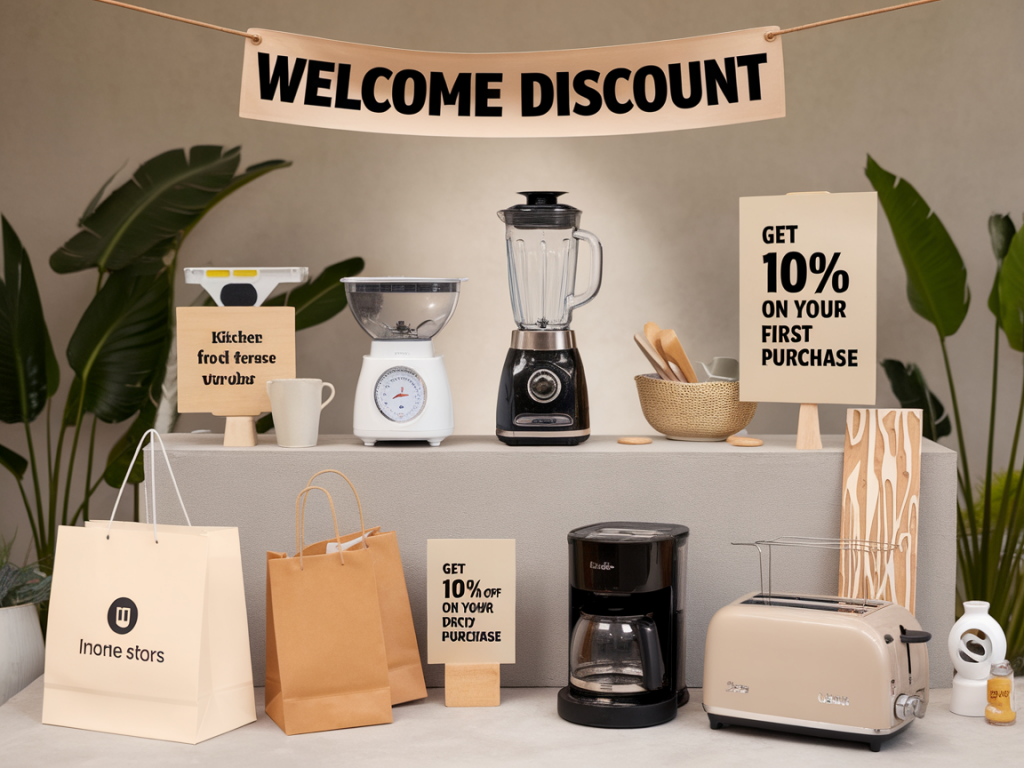
| Small discount (5–10% off) | +2% to +8% | Works when margins exist; mostly drives conversion, modest repeat lift. |
| Deeper discount (15–25% off) | +7% to +20% | Stronger short‑term reorders but can attract deal‑seeking one‑timers. |
| Free shipping on first order | +3% to +10% | High perceived value for categories sensitive to shipping (apparel, groceries). |
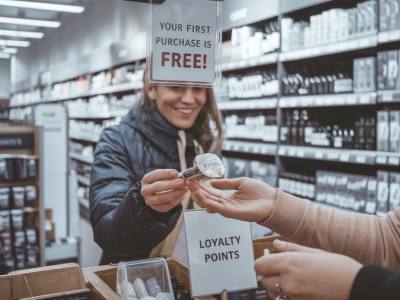
| Points for first purchase (earn points; redeemable later) | +6% to +18% | Works best when points are framed as progress toward a desirable reward. |
| Bonus points on signup + points on purchase | +10% to +30% | Combines immediate value with future incentive — higher long‑term lift. |
These are not precise predictions for your business; think of them as directional benchmarks. The lower bound is typical for commodity or low‑frequency goods; the upper bound applies when offers are well designed, communicated and complemented by a strong onboarding flow.
Why points often beat straight discounts for retention
From a behavioural and economic perspective, points systems tend to deliver better retention when they’re structured correctly. Here’s why:
- Endowment & sunk cost: Earning points creates a feeling of ownership. Customers are more likely to come back to “use” those points.
- Progress and gamification: Points let you show progress toward a reward (e.g. 300/1000 points), which increases repeat behaviour.
- Decoupling immediate discount from price anchoring: A straight discount can reset perceived value; points keep the product’s price intact while offering future value.
- Scope for tiering and higher AOV: Points can be rewarded at higher rates for larger baskets, encouraging AOV growth.
That said, points systems require a bit more setup: you need a redemption pathway, clear valuation, and communication to show members how close they are to the next reward. Poorly implemented points (unclear value, long delays to redeem) can underperform a simple discount.
When a discount is better
Discounts still have clear advantages:
- Immediate conversion impact — when your primary problem is converting traffic into first purchases.
- Simplicity — easier to communicate and implement than a loyalty ledger for very small businesses.
- When your average order value (AOV) is low and points would feel trivial — a 50‑point credit worth £0.50 won’t motivate repeat buying.
In practice I often recommend a hybrid: a small immediate discount (or free shipping) capped and paired with bonus points credited post‑purchase. That captures the conversion boost while planting a seed for future visits.
How to forecast retention lift for your business — a simple calculator approach
Run this quick, pragmatic exercise to estimate impact.
- Baseline: measure current 90‑day repeat rate for new customers (R0).
- Estimate conversion lift from the incentive (C). Use past promo results if available; otherwise use conservative estimates (5–15% for small offers, 15–40% for bigger ones).
- Estimate retention uplift among converters (U). Use the benchmark ranges above as a guide; points + onboarding tends toward higher uplift.
- Projected 90‑day repeat rate = R0 + (R0 * U) weighted by the fraction of customers who received/used the incentive.
Example: baseline new‑customer 90‑day repeat = 12% (R0). You add a welcome 15% discount; you expect U = +12% relative lift among recipients. Projected = 12% * (1 + 0.12) = 13.44% — an absolute lift of 1.44pp. If only 70% of new buyers use the code, adjust accordingly.
Design choices that change outcomes
Small tweaks can move you from the lower bound to the higher bound of the benchmarks:
- Timing of points: Credit points immediately after purchase, and send a clear email showing the balance and next attainable reward.
- Thresholds: Make the first redeemable reward achievable within 1–3 purchases; long horizons kill momentum.
- Personalised follow‑ups: Use email/SMS to remind members of points, show progress bars, and suggest next items that get them to the reward.
- Exclusivity framing: Present points as “member credits” or “welcome stash” — language influences perception.
- A/B test messaging: Test “£5 off your next order” vs “500 points towards £15 off” to see which framing drives the higher lift for your audience.
Metrics to track (and how to attribute)
Don’t rely solely on repeat rate. Track a small set of KPIs to understand value:
- Repeat purchase rate at 30, 90 and 365 days (cohorts)
- Customer acquisition cost (CAC) including cost of the incentive
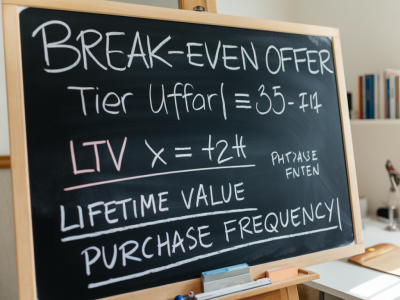
- Incremental LTV of the cohort vs control
- Redemption rate and average time to redemption
- Average order value and margin impact
Attribution: run randomized controlled experiments where possible. If you can’t A/B test the offer, create matched cohorts historically and adjust for seasonality and channel mix.
Practical playbook — what I usually implement
When I help a small business choose between the two, I follow this pragmatic playbook:
- Start with a hybrid: small immediate incentive (5–10% or free shipping) + points credited after purchase.
- Credit a visible “welcome bonus” of points equivalent to ~10% of AOV; show a clear redemption path to a tangible reward within 2 purchases.
- Automate onboarding emails: purchase receipt → points confirmation with progress bar → reminder 7–14 days later with product recommendations.
- Run an A/B test for 90 days measuring conversion lift and 90‑day repeat. Use the test to iterate.
- Measure incremental margin: if the program brings profitable LTV, scale. If not, adjust thresholds, point value or messaging.
In short: points have the edge for long‑term retention when implemented thoughtfully; discounts win at quick conversion. The combination — immediate value plus a future incentive — is often the best first experiment for SMEs with limited resources. If you’d like, I can sketch a simple A/B test template and email cadence tailored to your AOV and margin profile.