When I work with independent cafés, the most common brief I hear is simple: “Help us get customers to come back more often.” A well-designed 3-tier loyalty program is one of the most reliable ways to do that — it combines immediate gratification with clear progression, and it’s flexible enough for a small team to run without a marketing department. Below I share a practical blueprint you can adapt, plus traps to avoid and the metrics you should watch.
Why a 3-tier structure works for cafés
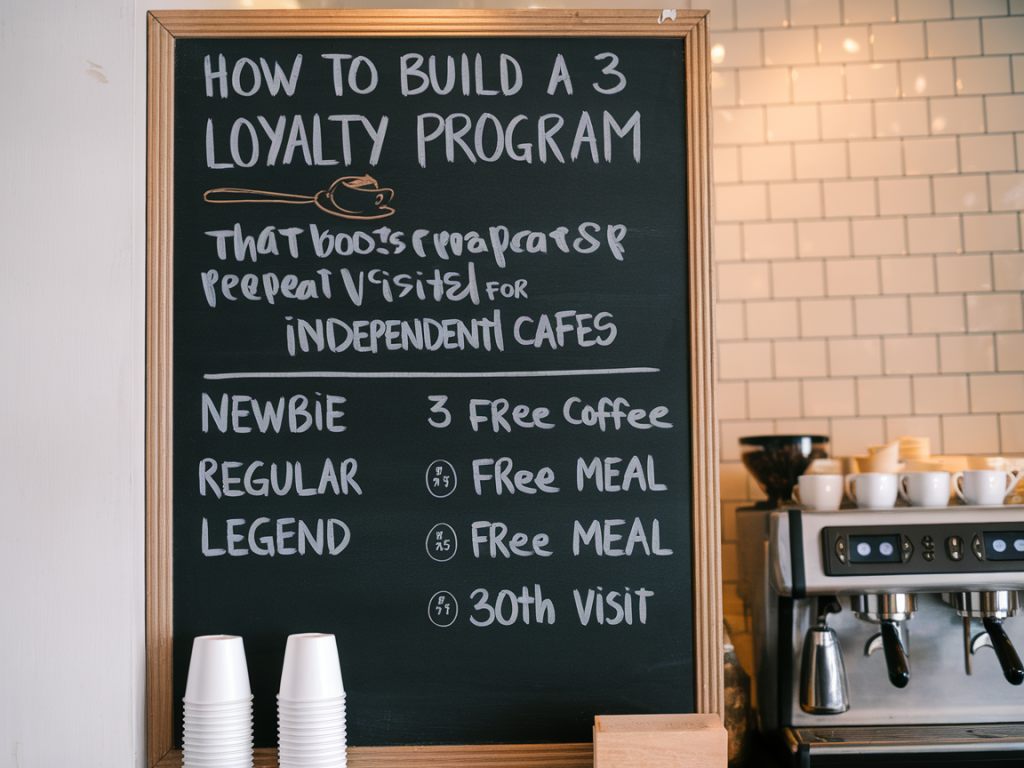
Three tiers strike the right balance between simplicity and motivation. A single-tier punch card drives short-term visits but quickly runs out of oomph. Five tiers can feel unattainable and administratively heavy. With three tiers — think Bronze, Silver, Gold (or Names that fit your brand) — you give customers an easy entry point, a reachable next step, and a clear aspirational level.
This structure supports three behavioural levers that matter for cafés:
- Frequency incentives: small, regular rewards to make a coffee purchase habitual.
- Average order increase: mid-tier perks that encourage add-ons (pastry, sandwich).
- Retention & advocacy: top-tier rewards that create emotional attachment and word-of-mouth.
Designing your tiers: simple, measurable, and brand-aligned
Start with the customer journey. Most independent cafés have repeat rates driven by locality and convenience — so your tiers should reward visits and spend but also reflect behaviours you can actually track.
- Tiers and entry rules: I recommend one of these approaches: points per purchase (e.g., 1 point per £1), visit-based (stamp per visit), or hybrid (points with visit multipliers). For simplicity, points work well if you have a POS that supports them; stamps are fine for very small operations or when you want a tactile interaction.
- Progression cadence: Make Silver achievable within a month of regular visits and Gold achievable within 3 months for your typical loyal customer. If Bronze→Silver takes too long, engagement drops.
- Perceived value: Rewards must feel meaningful but sustainable. Free drink at Silver isn’t wrong, but consider smaller, more frequent perks at Bronze (e.g., free syrup, loyalty-exclusive small pastry) and bigger lifetime benefits at Gold (e.g., 10% off all purchases, a limited monthly free item, invites to tastings).
Sample tier table
| Tier | How to reach | Typical rewards | Business impact |
|---|---|---|---|
| Bronze | 0–99 points (1pt = £1) or 0–4 visits in 30 days | Birthday drink, 1 free extra syrup, early access to pastry of the week | Increase visit frequency; collect opt-ins |
| Silver | 100–299 points or 5–12 visits in 60 days | Buy-one-get-one on slow days, £1 off on any pastry, priority seating during peak | Raise AOV; encourage weekday visits |
| Gold | 300+ points or 13+ visits in 90 days | 10% off, free monthly drink, invite to tasting events, refer-a-friend bonus | Retention and referral; brand advocacy |
Reward mechanics that actually move the needle
People respond best to frequent small wins plus a clear path to a bigger win. I often recommend a mix:
- Visit-based micro-rewards: a small freebie after 3 visits (e.g., free shot of espresso or small pastry). These boost short-term frequency.
- Spend thresholds: points that reflect spend encourage customers to add items to reach the next milestone.
- Time-limited boosts: double-points on weekdays or morning hours to shift behaviour to slower periods.
- Experiential rewards: top-tier-only events or behind-the-scenes tastings create emotional loyalty that discounts can’t buy.
Onboarding and communication: first impressions matter
How you introduce the program determines early adoption. I prefer a three-step onboarding flow:
- At POS: quick pitch and signup offer (first drink earns a welcome bonus).
- Email/SMS follow-up: confirm tier, show progress bar, and suggest an easy next action (e.g., “Come back before Friday to get double points on croissants”).
- In-shop signage and staff scripts: ensure baristas can explain the value in one line — “Join free, get a free pastry after three visits.”
Tech and ops for small teams
You don’t need an enterprise stack. Several SME-friendly options make a 3-tier program manageable:
- POS-integrated loyalty: Square Loyalty, Lightspeed — minimal manual work, automated points and redemption.
- Standalone apps: Stamp Me, Loyalzoo — good if you need simple stamps or points without changing your POS.
- Custom spreadsheets + email automation: works for tiny cafés but becomes fragile as you scale.
Choose a solution that tracks visits and spend reliably, syncs customer contact details, and allows targeted messaging. Manual systems almost always fail to scale because of staff time and errors.
Measurement: the KPIs to watch
Track these metrics from day one. They tell you whether the program is delivering commercial value:
- Repeat visit rate: percentage of customers who return within 30/60/90 days.
- Average order value (AOV): compare AOV for tier members vs non-members.
- Tier conversion: how many customers move from Bronze to Silver to Gold.
- Redemption rate: % of earned rewards actually redeemed — too high and you may be overpaying; too low and rewards aren’t compelling.
- Cost per incremental visit: (Loyalty cost) / (additional visits attributed to program).
Examples from the field
One of the cafés I worked with had a loyal lunchtime crowd but struggled on weekday mornings. We added a Silver-tier perk: “Buy a coffee before 9am and get double stamps.” Within six weeks, morning visits rose by 18% among tier members and overall weekday sales were up 7%. The cost was offset by increased pastry add-ons and an uptick in repeat visits that persisted after the promotion.
Another small chain used an experiential Gold-level reward — an invite to a cupping session with limited spots. It created buzz on Instagram and increased referrals; more importantly, Gold members’ LTV rose substantially because they brought friends and spent more during visits.
Common pitfalls and how to avoid them
- Overcomplicating rewards: If staff can’t explain the program in one sentence, customers won’t sign up. Keep mechanics clear.
- Underestimating cost: Model the worst-case scenario for redemptions. Protect margins with expiry windows and redemption limits.
- No follow-up after signup: People sign up, forget. Use immediate welcome offers and progress reminders.
- Neglecting staff training: Loyalty depends on staff enthusiasm. Role-play sign-up dialogues and incentivise frontline adoption.
Building a 3-tier loyalty program for an independent café isn’t about copying a mega-brand playbook. It’s about designing clear, achievable steps that fit your customer base and your operations. Keep the mechanics simple, make small rewards frequent, and save your biggest emotional wins for the top tier. If you set up the right measurement from day one, you’ll be able to iterate quickly and grow the program into a dependable engine for repeat visits.