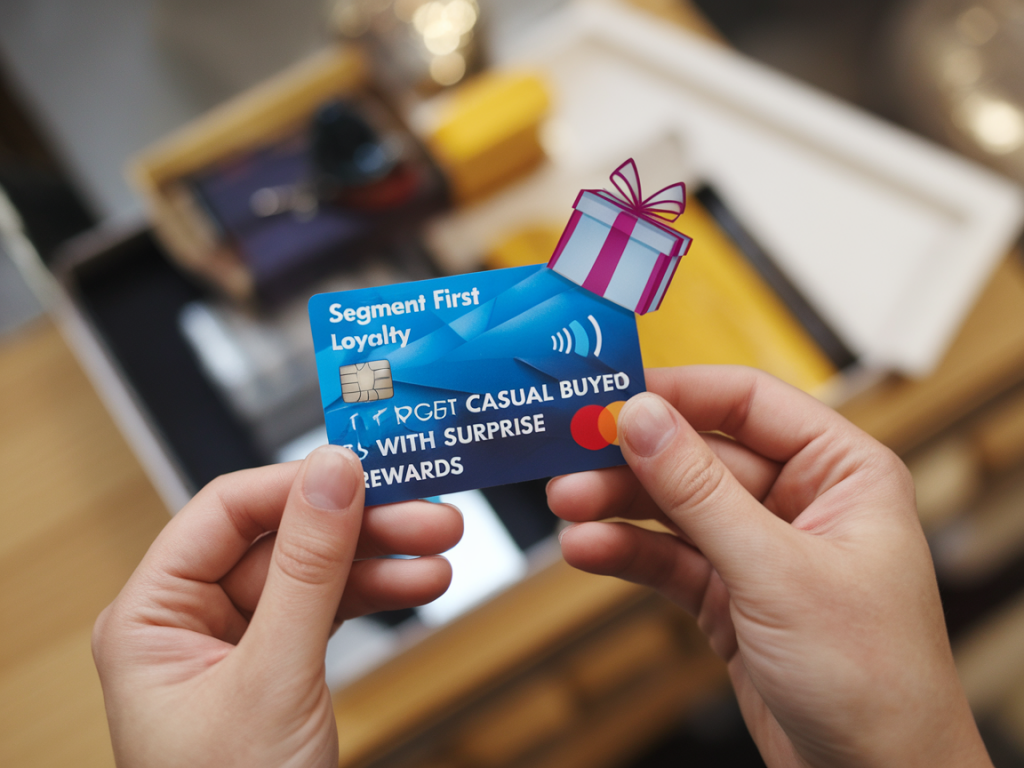
I remember the first time I recommended a “surprise and delight” experiment to a client who sold kitchenware online. They were obsessed with their top 10% of customers — rightly so — but overlooked a much larger group that could be nudged into higher lifetime value with small, well-timed gestures. Since then I’ve started thinking about loyalty programs from a segment-first perspective: not every member deserves the same treatment, and some of the biggest returns come from surprising casual buyers at the right moment.
What I mean by "segment-first loyalty"
Segment-first loyalty is about designing rewards and interventions with a specific customer segment in mind, rather than applying a one-size-fits-all program. For casual buyers — customers who purchase infrequently, have low average order value (AOV), and little engagement — the goal is not to match VIP perks. It’s to create frictionless, timely, value-led interactions that change behaviour without overspending.
Why target casual buyers with surprise rewards?
There are three practical reasons I focus on casual buyers for surprise rewards:
How to identify the right casual-buyer segment
Segmentation has to be targeted and evidence-based. I typically combine behavioural and recency-frequency-monetary signals:
You can refine further with intent signals — product categories purchased, cart abandonment history, first purchase reasons gathered at checkout, or whether they used a promotional code. In apparel, for example, consumers who bought basics once are often easy wins; in DTC beauty, someone who bought a single trial kit is a prime candidate for a surprise refill or sample offer.
When to send surprise rewards
Timing is everything. A reward sent at the wrong moment looks spammy or wasteful. From my experiments, the highest ROI moments are:
Types of surprise rewards that work for casual buyers
Not all rewards are equal. I favour rewards that feel personal, offer immediate value, and are easy to redeem.
How I design surprise reward mechanics
Designing the mechanics is where many programmes falter. I use a simple framework:
Examples from the field
One client in hospitality used a simple surprise: casual diners who hadn’t returned in 6 months were sent a personalised note with a complimentary dessert voucher redeemable on their next booking. Redemption rate was modest (8–12%) but those who returned spent 25% more and booked on average 1.6x the table size. The cost was trivial compared to the uplift.
Another example from retail: I ran an A/B test where casual buyers received either a 15% discount email or an invitation to claim a free sample added automatically to their next order. The sample variant drove fewer immediate conversions but produced 3x higher repeat purchase rate at 90 days and a better margin profile.
How to measure and avoid common pitfalls
Measurement is non-negotiable. I track incremental lift using holdout groups and attribution windows aligned with product repurchase cycles. Key metrics I monitor:
Watch out for these pitfalls:
Testing roadmap I recommend
Here’s a simple phased test I often run:
| Metric | Target (example) |
| Activation rate | 8–15% |
| Repeat purchase within 90 days | 15–30% uplift vs control |
| Cost per incremental order | Less than Customer Acquisition Cost |
Surprise rewards aren’t a magic wand, but when applied thoughtfully to casual buyers they can unlock a meaningful and cost-effective path to higher retention. The secret is to be precise about who you target, why you’re targeting them, and how you’ll measure success. And to keep the surprises genuine — that’s what makes a casual buyer feel like a valued customer.