Customer Retention

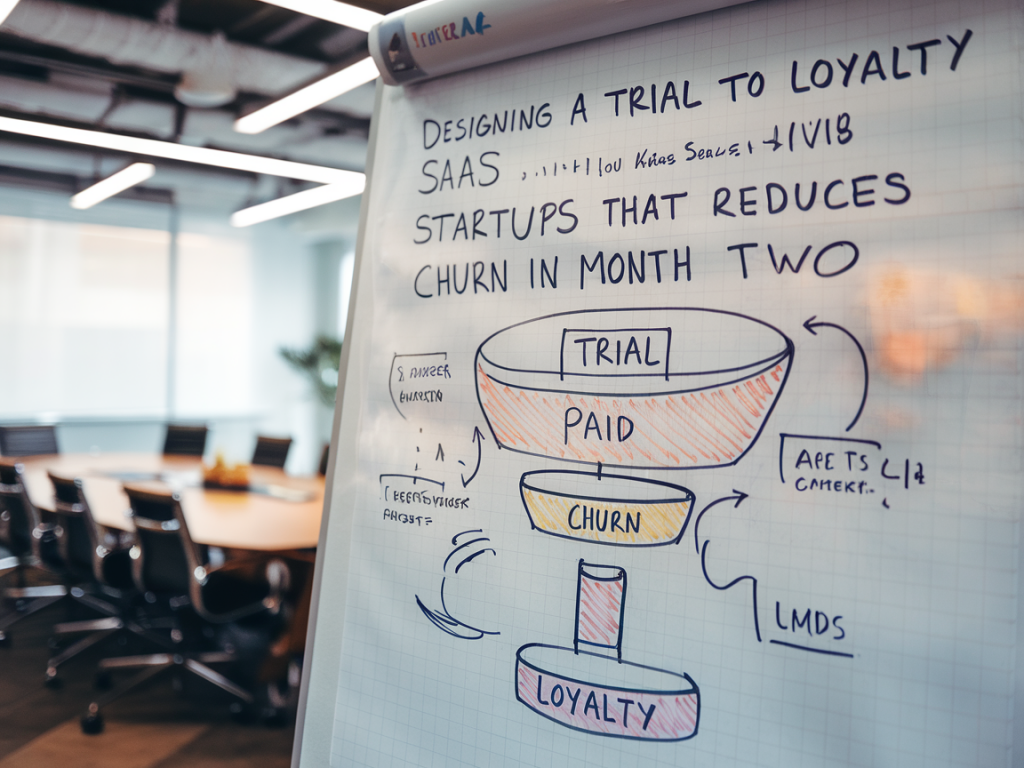
Designing a trial-to-loyalty path for SaaS startups that reduces churn in month two

Designing a trial-to-loyalty path for SaaS startups that reduces churn in month two

Month two churn is the silent killer for many SaaS startups. You get sign-ups, they try the product, maybe they even convert in week three — and then they quietly disappear in month two. I’ve seen this pattern again and again working with startups: the first touchpoints are good enough to spark interest, but the path from trial to loyal user isn’t intentionally built. In this piece I’ll walk you through a practical, evidence-based trial-to-loyalty path you can implement quickly to reduce month-two churn — with concrete triggers, messaging, and metrics to track.

Why month-two churn happens (and why it’s fixable)

From my experience, month-two churn usually comes down to three failures:

  • Value discovery failure: users haven’t hit an “aha” moment during trial or the early paid period.
  • Activation friction: the product requires too much setup or behaviour change that’s not scaffolded.
  • Relationship decay: communications drop off once the sale is made, leaving users unsure of next steps or ROI.
  • These are all addressable with a deliberate journey that spans pre-conversion, onboarding, and early lifecycle nurturing. The goal is to make the customer feel they’re getting measurable value before month two ends.

    Design principles I use

    When I design trial-to-loyalty flows I follow four simple principles:

  • Prioritise one clear Aha moment: define the single metric or action that predicts long-term retention (e.g., invited a teammate, uploaded X items, completed first campaign).
  • Reduce time-to-Aha: aim to get users to that moment within the first 7–14 days.
  • Measure and segment: treat every step as a hypothesis to test — separate users by source, job role, and intent (evaluation vs quick purchase).
  • Layer human touch: automated nudges are necessary, but a timely human check-in (CSM outreach or in-app chat) at the right trigger can halve churn.
  • Concrete trial-to-loyalty path (timeline and triggers)

    Here’s a simple timeline you can adapt. I’ll include what to send, what to measure, and the CRM or analytics triggers you’ll need.

    DayActionTrigger / Goal
    Day 0Welcome + three-step setup checklist (email + in-app)Complete 1st setup task
    Day 2–4Guided onboarding walkthrough; highlight Aha momentComplete Aha-related action
    Day 7Behavioural nudge + social proof (case study)Engagement with core feature
    Day 10–14Use-value email + invite to product demo or workshopSchedule demo / attend workshop
    Day 15–21Human outreach for “high-value” cohorts; proactive help for low engagementCommit to plan / identify blockers
    Day 25–30Conversion check: trial ends or early paid period; ROI reminder + next actionsRenewal or trial extension with incentive

    Onboarding content that actually moves the needle

    Not all onboarding is equal. I recommend a mix of the following:

  • Interactive in-app checklist: short, progressive tasks; show progress and reward completion.
  • Micro-tutorials: 60–90 second videos focused on single outcomes (how to set up integrations, invite users, create first campaign).
  • Pre-built templates: remove decision fatigue with starter templates tailored to verticals (e.g., ecommerce welcome email, SaaS trial activation flow).
  • Success playbook: a one-page PDF showing a simple 30-day plan to hit the Aha moment.
  • I often reuse templates from tools like Intercom or Appcues for in-app flows and Calendly for demo scheduling — the friction savings add up.

    Segmentation: treat trial users like different animals

    Every trial user isn’t the same. I split users into three behavioural segments during the trial:

  • Fast adopters: hit the Aha moment in 48–72 hours — nurture toward power-user features and upsell opportunities.
  • Potential long-term users: engage with core features but haven’t hit Aha — focus on coaching, templates, and human outreach.
  • At-risk users: sign up but don’t engage — deploy reactivation sequences and low-friction help (chat, onboarding call, or auto-extension).
  • Use simple rules in your CRM (Pipedrive, HubSpot, or your backend) to tag users into these cohorts automatically so your comms and CSMs act differently for each group.

    Incentives & pricing nudges that reduce churn without hurting ARPU

    Discounts aren’t the only lever. I prefer incentives that increase commitment and usage:

  • Time-limited feature unlocks: unlock a paid feature for 14 days post-conversion to prove value.
  • Usage credits: small credits for inviting teammates, uploading data, or running a campaign.
  • Sponsor-led onboarding: offer a free one-hour setup session for teams that convert within trial — the session increases long-term product adoption.
  • These tactics increase habit formation and perceived switching costs without conditioning users to expect price cuts.

    What to measure (and what success looks like)

    Metrics need to be simple and mapped to action:

  • Day 7 Aha rate: percentage of users hitting the Aha moment in the first week. Target: 40–60% depending on product complexity.
  • Trial conversion rate: trial-to-paid conversion. Target: depends on stage, but incremental lifts matter — a 5–10% increase is huge.
  • Month-2 retention: cohort retention at day 60 compared to day 30. Your KPI is increasing the delta between day 30 and day 60 retention.
  • Engagement depth: weekly active usage of core feature(s).
  • Run cohort analysis weekly. If month-two retention is lagging, troubleshoot by cohort (by source, by onboarding completion) and test one hypothesis at a time — reducing trial-to-Aha time, adding a human touch, or changing the incentive.

    Small experiments with big wins

    Here are experiments I’ve run that produced measurable improvements:

  • Replace a generic onboarding email with a 3-step Aha checklist: increased day-7 Aha rate by 28%.
  • Offer a 1-hour setup call to new paid customers who converted in-trial: reduced month-2 churn by ~35% for that cohort.
  • Auto-extend trial by 7 days for users who partially complete onboarding: lifted trial-to-paid by ~8% and improved month-two retention by allowing more time for discovery.
  • Playbook: a 30-day checklist you can copy

    Here’s a condensed checklist to implement this path in your stack:

  • Define your Aha moment and instrument it in analytics (Mixpanel, Amplitude, or GA4).
  • Create a 3-step in-app onboarding checklist tied to the Aha moment.
  • Build an email sequence: Day 0, Day 3, Day 7, Day 14, Day 21, Day 28 — each with a single CTA.
  • Segment users into Fast / Potential / At-risk automatically.
  • Set triggers for human outreach (e.g., no Aha by Day 10 triggers SDR/CSM touch).
  • Run two experiments in parallel: a messaging change and a human-touch intervention. Measure cohort retention day 30 vs 60.
  • Reduce month-two churn by engineering those early experiences so users either hit the Aha moment or receive tailored help. The interventions are low-tech: clear checklists, proactive outreach, and incentives that increase usage. What changes most often isn’t the product — it’s the path you create around it.

    You should also check the following news:

    Why tiered expiry rules can save your program from points liability and how to implement them
    Loyalty Programs

    Why tiered expiry rules can save your program from points liability and how to implement them

    I often get asked by founders and marketing leads how to stop their loyalty programme from becoming...

    Dec 02 Read more...
    The psychology behind surprise rewards and exactly when to send them in the customer journey
    Loyalty Programs

    The psychology behind surprise rewards and exactly when to send them in the customer journey

    I still remember the first time a small coffee chain I was advising surprised me with a free pastry...

    Dec 02 Read more...