Abandoned carts aren’t just lost orders — they’re signals. Every time someone leaves a basket behind, they’re telling you there's interest, friction, or uncertainty. Over the last decade I’ve helped SMEs turn that signal into a growth loop by offering small, timely incentives that nudge purchase and invite customers into a loyalty relationship. In this post I’ll share a step-by-step playbook for converting abandoned carts into loyalty members using microrewards — practical, tested, and ready to implement with modest tech and budget.
Why microrewards work (and why they beat blanket discounts)
Microrewards are low-cost, high-perceived-value incentives: think small points bonuses, shipping credits, limited-time bonus samples, or expedited delivery vouchers. They work because:
Playbook overview — 6 practical steps
I break this into six clear steps. Each one is action-oriented and designed for small teams.
Start with data: where do cart abandonments happen? Add-to-cart → checkout start → email entry → payment. Use analytics (Google Analytics, Shopify reports, or your platform) to quantify drop-offs and segment by traffic source, device, cart value and customer type (guest vs logged-in).
Pick 2–3 microrewards to test. Keep them cheap to your margins but high in perceived value. Examples:
Model the unit economics: expected uplift × average order value × conversion window should exceed the cost of the reward. For many SMEs, a microreward budget of 2–6% of AOV is sustainable if it lifts conversion and repeat rate.
The most reliable way to convert abandons into members is to capture an email (or phone) before exit. Use a well-timed exit-intent or cart overlay that offers a microreward for entering a contact method. Messaging matters:
Keep forms minimal (email + consent checkbox). If you already collect email at checkout, consider a one-click “save cart & claim reward” that triggers an email with a reward retrieval link.
Once you have contact details, the reclaim journey must be friction-free. A typical flow I use:
Use URL parameters to pre-fill carts (Shopify cart permalinks work well) and UTM tags to track channel performance.
Copy and creative examples that convert
Short, benefit-led copy wins. Examples I’ve used with success:
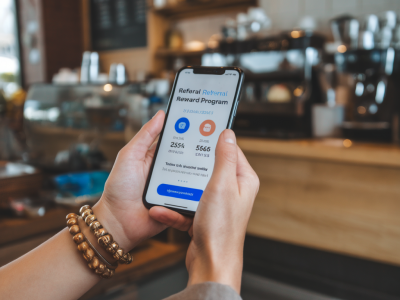
Visuals: show the reward as a badge over the cart image, and include a tiny countdown for urgency. On mobile, ensure CTAs are thumb-friendly and overlays are easy to dismiss if desired.
Integrations & tech — what you actually need
You don’t need enterprise software. My recommended stack for SMEs:
Connect these so that claiming a microreward triggers points allocation in your loyalty app and starts the email/SMS conversion flow. If you’re on a tight budget, you can initially implement points as coupon codes and migrate once you validate the approach.
KPIs and what to A/B test
Measure both acquisition (new members) and economics (cost per acquisition vs incremental revenue). Key metrics:
| Metric | Why it matters |
| Abandon cart recovery rate | Direct impact of the flow |
| New loyalty sign-ups per 100 abandons | How effective the incentive is at turning interest into permission |
| Cost per recovered order | Reward cost + comms cost vs incremental revenue |
| Repeat rate of recovered customers | Whether we’re creating true members |
| CLV uplift after 3–6 months | Long-term value from microrewarded members |
A/B tests to run:
Segmentation & lifecycle follow-up
Don’t treat recovered carts as one-off wins. Add them to a lifecycle track:
Segment by acquisition channel and cart value. High-AOV recovered customers get a different follow-up (personalised recommendations, concierge support) than low-AOV ones.
Real-world example
With a mid-sized homewares brand I worked with, we implemented a 100-point instant reward (~£4 value). Cart overlays offered points in exchange for an email. Over three months:
The program paid for itself within the first 90 days thanks to AOV and repeat behaviour gains.
If you want, I can help you map this to your store: run the funnel analysis, pick the right microreward mix, and draft the exact copy and automations. Drop me the basic metrics (current abandon rate, AOV, platform) and I’ll sketch the first outreach sequence you can test this week.